March is Women’s History Month, and it is a designated time to reflect on the accomplishments of women as leaders, and how much farther we have to go. On Ryerson University’s campus we celebrated Viola Desmond Day and International Women’s Day.
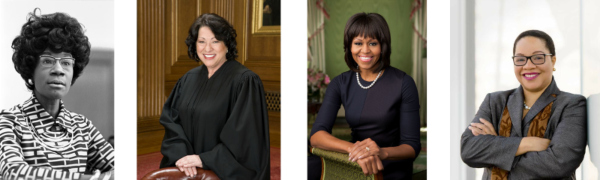
Both celebrations underscored how women leaders are essential to advancing the status of women in North America. Julia Hanigsberg, Ryerson’s Vice President of Administration and Finance, spoke to the incredible accomplishments of women; but unfortunately, women, specifically Women of Color, in Canada and the United States, still lag behind according to recent reports of The Diversity Institute.
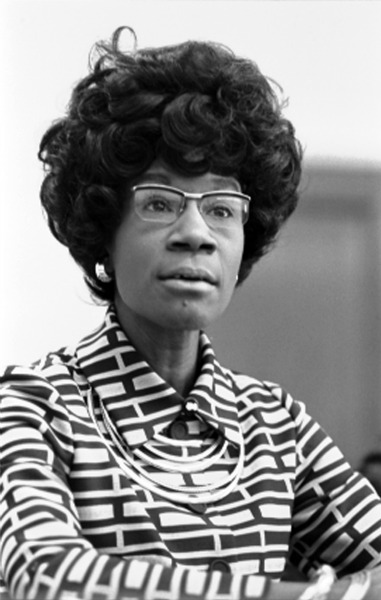
I recall when I was in elementary school that one of my favorite teachers, a white male, asked everyone to share what they wanted to be when they grow up. When it was my turn I shared that I wanted to become President of the United States. My classmates laughed and my teacher politely told me, “Now, now Denise, you know you can’t be President of the United States”. Did he say this to me to spare me? Was it because I was Black, a woman, or both? I had no role models to speak of, just an idea. However, little did I know, when I expressed that aspiration, Shirley Chisholm was making history as the first Black women to run for President of the United States. After her run in 1972, two other Black women have run Lenora Fulani in 1988 and Carol Moseley Braun in 2004. None of them received the nomination but they dared to do it their way!
Since that elementary school episode many years ago, I realize that it has influenced my leadership style and motivated me to support and encourage women to become leaders in their own right. As a senior administrator and diversity leader in post secondary education, I have three basic rules:
- Be “Rude”. When I was a graduate student, I often found that others would dominate the conversation and discussion. Even when I raised my hand and was acknowledge by the instructor, I was not able to get a word in edgewise. So, I decided that being “rude”, interrupting and cutting others off would be the only means of getting my voice heard. Fortunately, this is not something I must do on a consistent basis, but when necessary, I break from what I consider as my “polite persona” and insert myself into the conversation.
- Go Ahead and Ask. “If you don’t ask, then you won’t get”. I am not sure when I first heard this line but since becoming a senior officer I am more acutely aware that men versus women will ask for what they believe they deserve more so than women. In the 2003 book Women Don’t Ask: Negotiation and the Gender Divide by Linda Babcock and Sara Laschever, the authors underscore that women disadvantage themselves by not negotiating. While many women have been socialized to be nice, polite, and considerate of others, the outcome is that we short change ourselves, not realizing that if we simply asked, we could have created a better situation for ourselves and loved ones. This applies to salaries, moving expenses, vacation time, professional development, job assignments, etc. Since my first academic position at the University of Illinois, I always made sure to negotiate and ask. In most cases I was able to secure a greater compensation package and/or perks to my contract that made it a win-win.
- Be Inclusive. Remember to include those who are typically not invited to the table. I believe it is important to recognize that in the hierarchical structure of post-secondary institutions, often important voices are left out. As much as I can, I take it upon myself to be inclusive and invite those voices that are not typically at the table. In doing so, I gain so much more; it helps me to address my blind spots and tunnel vision. More importantly, it is a means of engaging and tapping the talent of those who have much to offer.
These are three simple rules I try to follow as a leader and CDO (Chief Diversity Officer).
What rules do you feel should be added to the list?
Leave a Reply
You must be logged in to post a comment.